
New Disease Testing Component Facilitates Lower-Cost Diagnostics
Cockrell School of Engineering | A new tool could reduce costs for diagnosing infectious diseases.
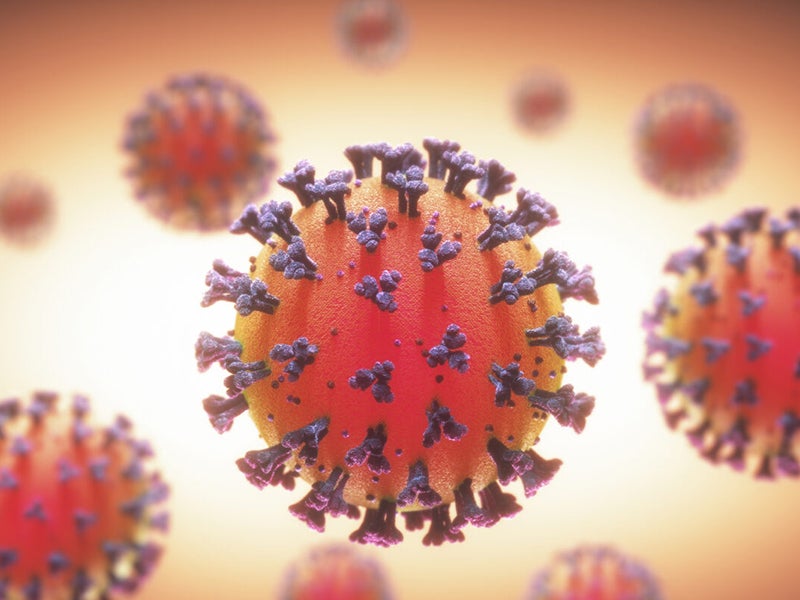
Biomedical researchers from The University of Texas at Austin have developed a new, less expensive way to detect nuclease digestion – one of the critical steps in many nucleic acid sensing applications, such as those used to identify COVID-19 and other infectious diseases.
A new study published in the journal Nature Nanotechnology shows that this low-cost tool, called Subak, is effective at telling when nucleic acid cleavage occurs, which happens when an enzyme called nuclease breaks down nucleic acids, such as DNA or RNA, into smaller fragments.
The traditional way of identifying nuclease activity, Fluorescence Resonance Energy Transfer (FRET) probe, costs 62 times more to produce than the Subak reporter.
“To make diagnostics more accessible to the public, we have to reduce costs,” said Soonwoo Hong, a Ph.D. student in the lab of Tim Yeh, associate professor in the Cockrell School of Engineering’s Department of Biomedical Engineering, who led the work. “Any improvements in nucleic acid detection will strengthen our testing infrastructure and make it easier to widely detect diseases like COVID-19.”

When the Subak reporter turns red it’s an indication that nucleic acid cleavage has occurred.
The research team – which also included Jennifer Brodbelt, professor of chemistry at UT Austin and MinJun Kim, professor of mechanical engineering in Southern Methodist University’s Lyle School of Engineering – replaced the traditional FRET probe with Subak reporter in a test called DETECTR (DNA endonuclease-targeted CRISPR trans reporter).
ARTICLE ORIGINALLY PUBLISHED ON COCKRELL SCHOOL OF ENGINEERING WEBSITE.