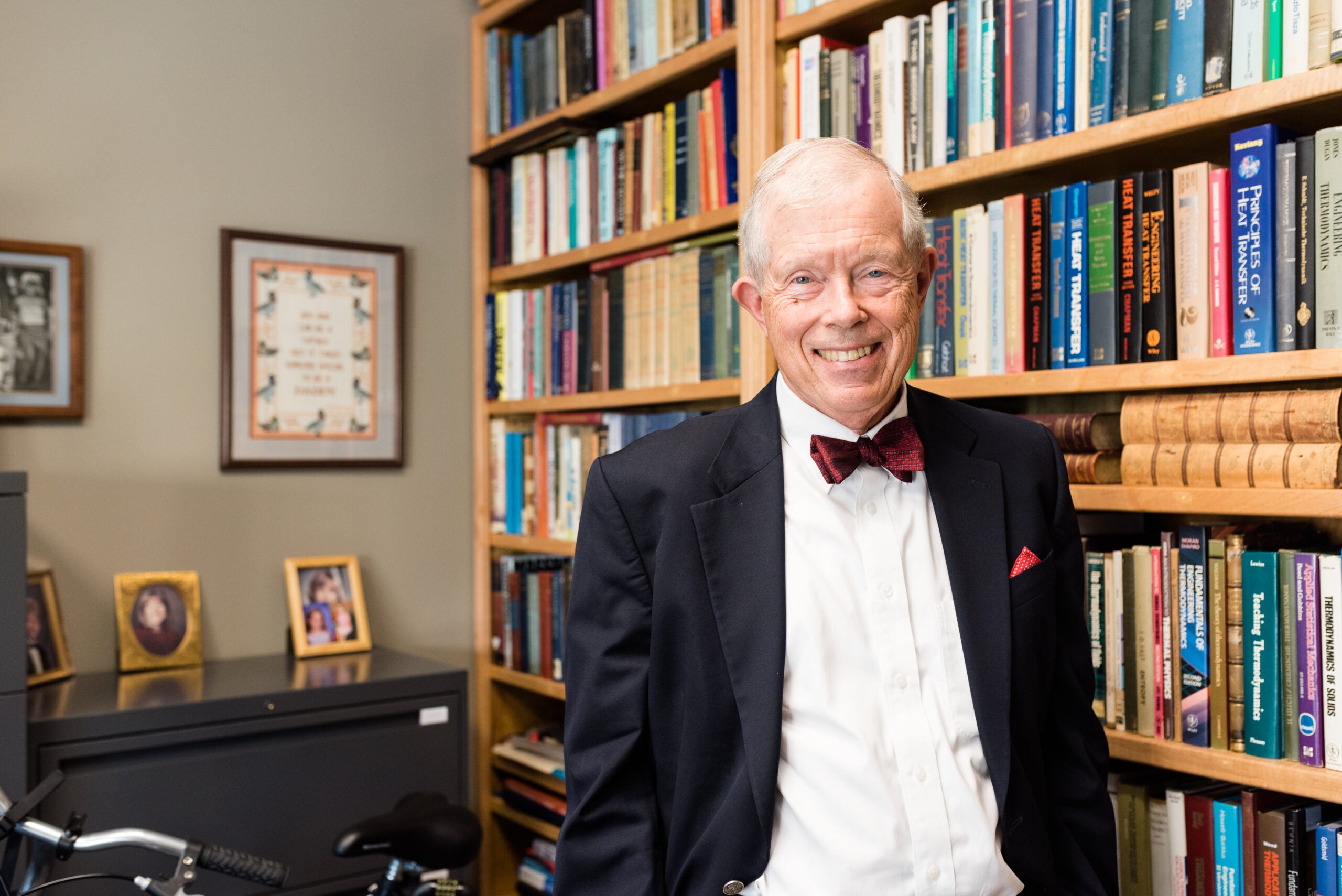
Bowties and Biomedical Engineering: The Legacy of Ken Diller
The trailblazing professor and Texas BME founding father retires after 53 years at UT.
Throughout his 83 years on this planet, including 53 at The University of Texas at Austin, Ken Diller has always been building something.
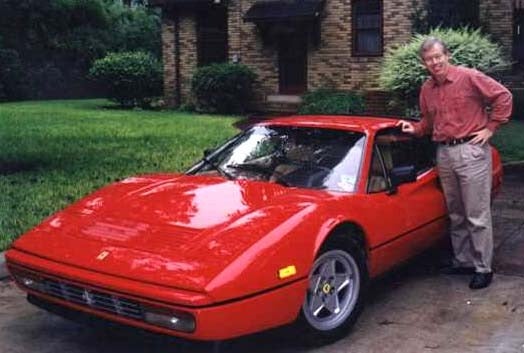
The cars he and his buddies worked on as teens in rural Ohio. The wind tunnels, custom microscopes and other tools he fabricated as a mechanical engineering student. The furniture he and his wife, JoAnn, made in their woodworking shop. The biomedical engineering department he founded that is celebrating its 25th anniversary this year. And, the unlikely bridge between the two core aspects of his life: science and faith.
And now, as his time at UT comes to a close, the lasting bonds with three generations of family. All of this is motivated by his personal philosophy: devotion to his passions, which have evolved throughout the seasons of his life.
”It pays to know your passions and realize that over the years, as you maneuver through your life, that passion is going to take on different flavors, different shapes, and you want to be comfortable with it and embrace it and pursue it,” Diller said.
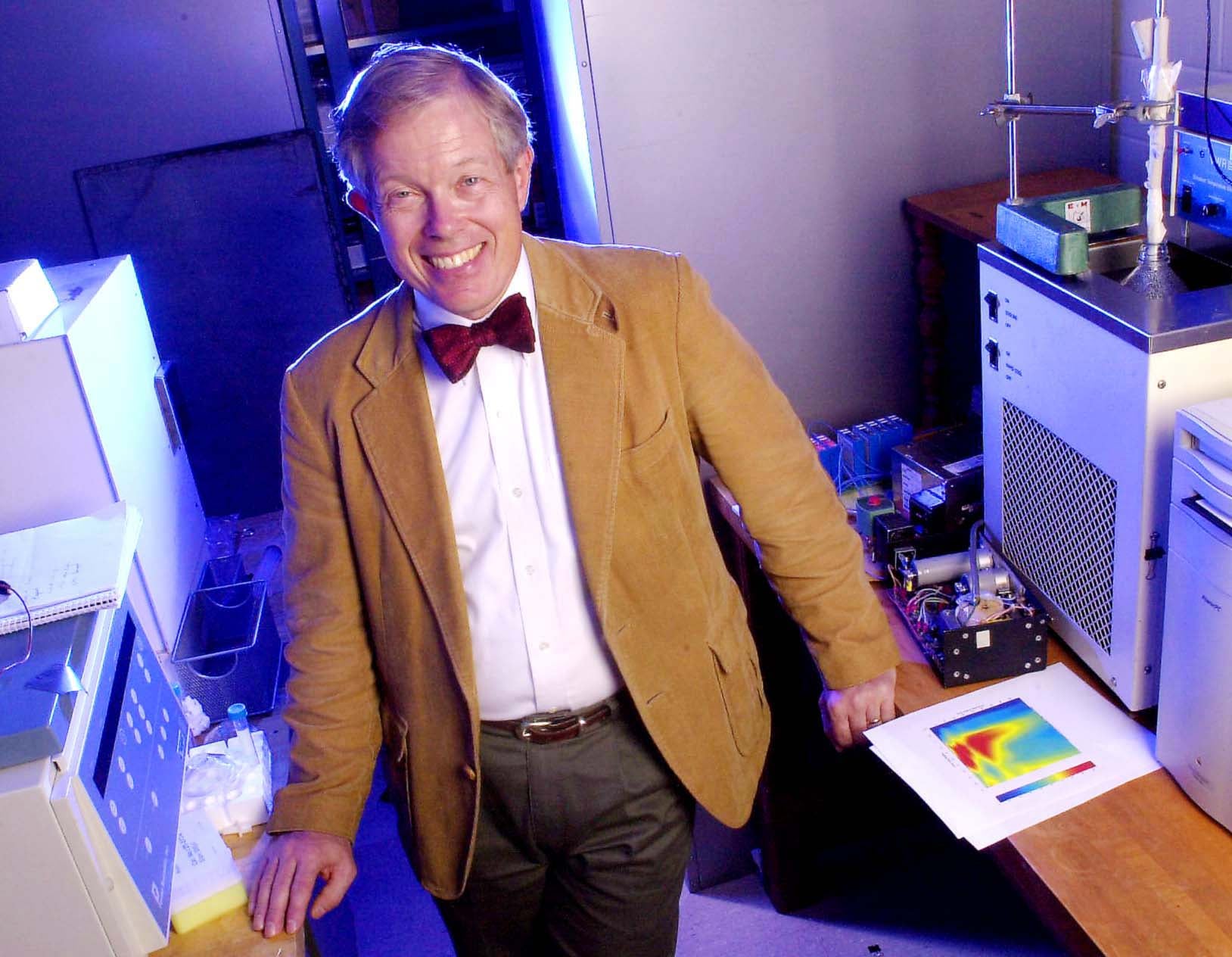
These passions, in some cases, seem contradictory. Diller is a man of both science and faith, which are often pitted against each other. He’s a roll-up-your-sleeves and fix-it guy, but you’ll also rarely see him without one of his signature bowties.
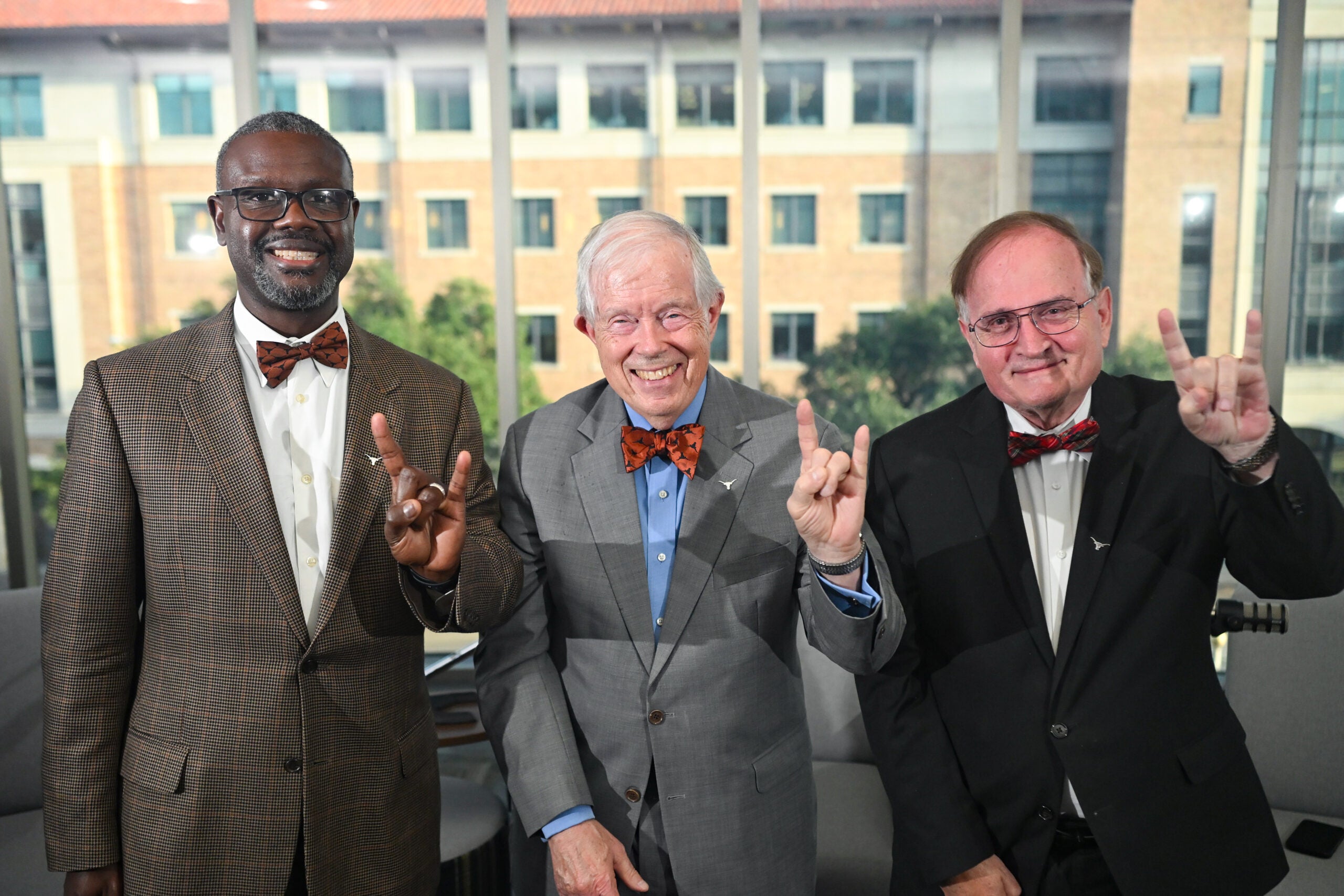
In addition to following his own passions, Diller is known for helping others do the same. The evidence came at his retirement ceremony in April, which commemorated the impact he’s had over his more than half-century at UT.
Current and former students, faculty and staff returned to the Forty Acres to celebrate Diller, many of them decked out in bow ties of their own. They have gone on to succeed in medicine, academia, aerospace and more.
”We owe him a lot for the 53 years he’s been here,” said Nicholas Peppas, a world-renowned biomedical and chemical engineering faculty member whom Diller hired when he was starting up the department.
Nicholas Peppas
He showed us how biomedical engineering could be done and should be done. He’s led an incredible life, and he’s done so much for all of us, for the city, for the state, for the country.
A Department is Born
For the first 17 years of his tenure at UT, Diller avoided leadership positions, choosing instead to focus on his own career and mentoring his students. But, as he says, passions can and will change.
One big change came in 1990 when he was asked to become the chair of the mechanical engineering department. At the same time, the field of biomedical engineering was just beginning to take shape.
UT was home to an existing biomedical engineering Ph.D. program, but no formal department. Diller was hired as UT’s second biomedical engineering professor. And there were only a handful of biomedical engineering programs in the U.S.
The Whitaker Foundation, named for prominent engineer Uncas Whitaker, was changing that by aggressively funding start-up biomedical academic programs. At the behest of then Dean Ben Streetman, Diller put together a proposal to the Whittaker Foundation that was successful and became a major factor in UT deciding to start their own BME Department.
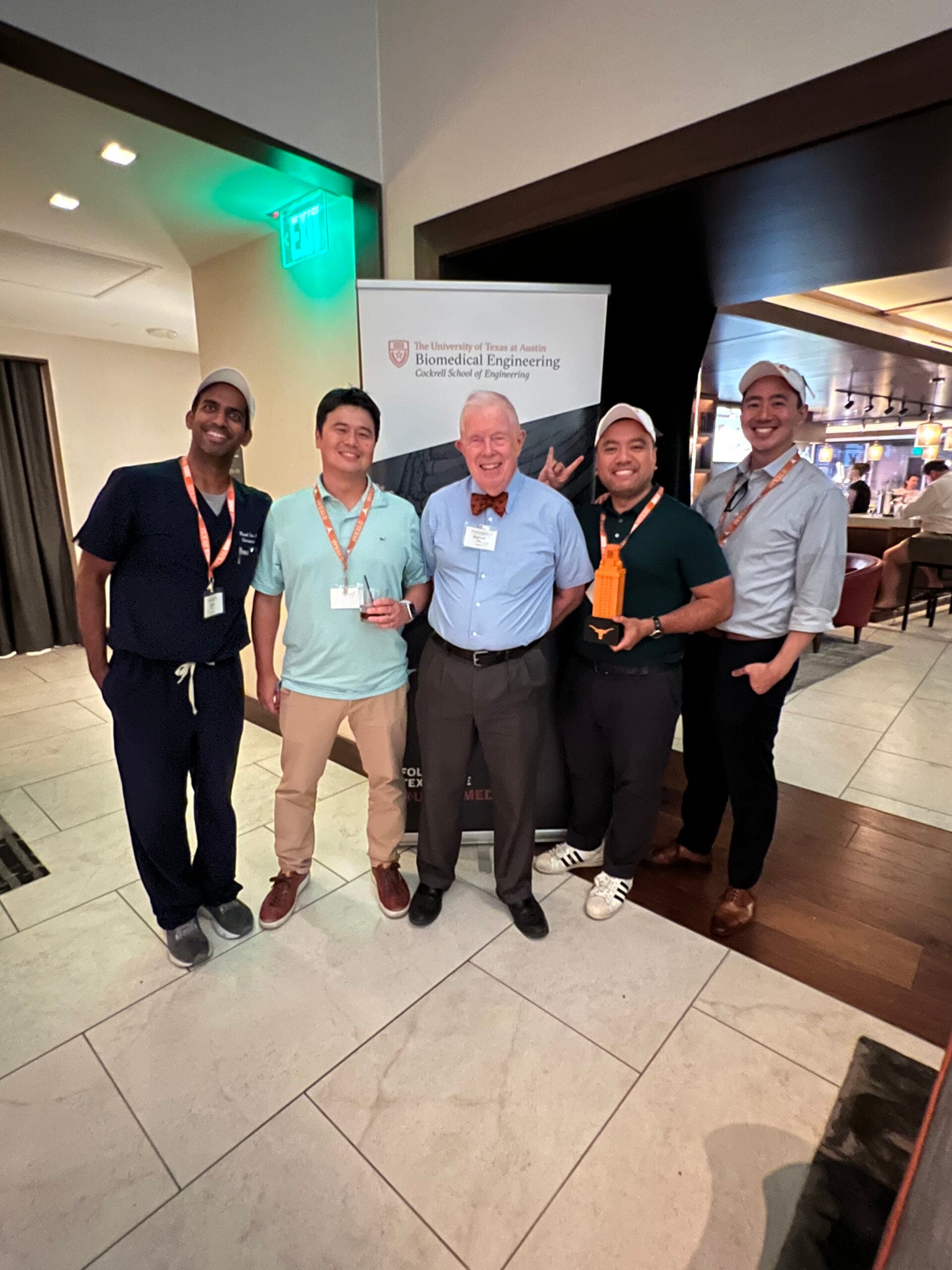
Diller (middle) with members of the first BME department graduating class.
At the same time, the National Science Foundation sought to establish a standard for biomedical engineering curricula for the many new departments starting up across the country. The organization hosted a competition to set up a national center for this purpose. Diller was at the heart of the winning team of Vanderbilt, Northwestern, Texas and Harvard/MIT (VaNTH) that won a $22 million grant to provide national leadership for developing teaching materials and guidelines for the many dozens of new BME programs.
This grant funding carried with it a great responsibility. The team was tasked with developing a biomedical engineering curriculum from scratch that other programs could use and build on.
”This was a once-in-a-lifetime opportunity to establish a curriculum where one did not exist before,” Diller said. “To take advantage of this opportunity, we needed resources, a dedicated faculty, our own curriculum, our own culture and our own space. All of these aspects contributed to the UT BME department’s start.”
But he knew he couldn’t do it alone. Diller recruited several young colleagues across the Forty Acres to help get the BME department off the ground. This unique experience helped each of these researchers secure leadership roles at other institutions: Rebecca Richards-Kortum (now at Rice University), Christine Schmidt (University of Florida), and Marcus Pandy (University of Melbourne).
In addition to developing a curriculum and a culture, this work involved recruiting superstar faculty members like Peppas, who would succeed Diller as chair, as well as many young rising stars, to cement the department’s future.
It also meant finding a campus home for the burgeoning department.
Beyond the Herculean effort to get the building approved, the small touches Diller pushed for made a big difference. The wide halls were meant to allow wheelchair users room to pass. Nursing rooms supported young faculty with families.
The lobby, one of the building’s signature spaces, is replete with biomedical images, including the sonogram of Professor Mia Markey’s expectant second child.
”Ken did a lot of the design work, and all these little touches show how thoughtful he was about our culture,” said Peppas.
Research and Expertise
Diller was the inaugural chair of the department and served two terms. His watch ended in 2009, three years after the building opened and the first graduating class got their diplomas.
At age 67, most people would have been content to call it a career. But Diller isn’t the type to slow down, so he refocused on his research.
Since his days as a student, first at Ohio State University and then at the Massachusetts Institute of Technology, he built new research equipment, including a wind tunnel to test helicopter rotors and an enhanced microscope to observe the effects of freezing tissue at the cellular level.
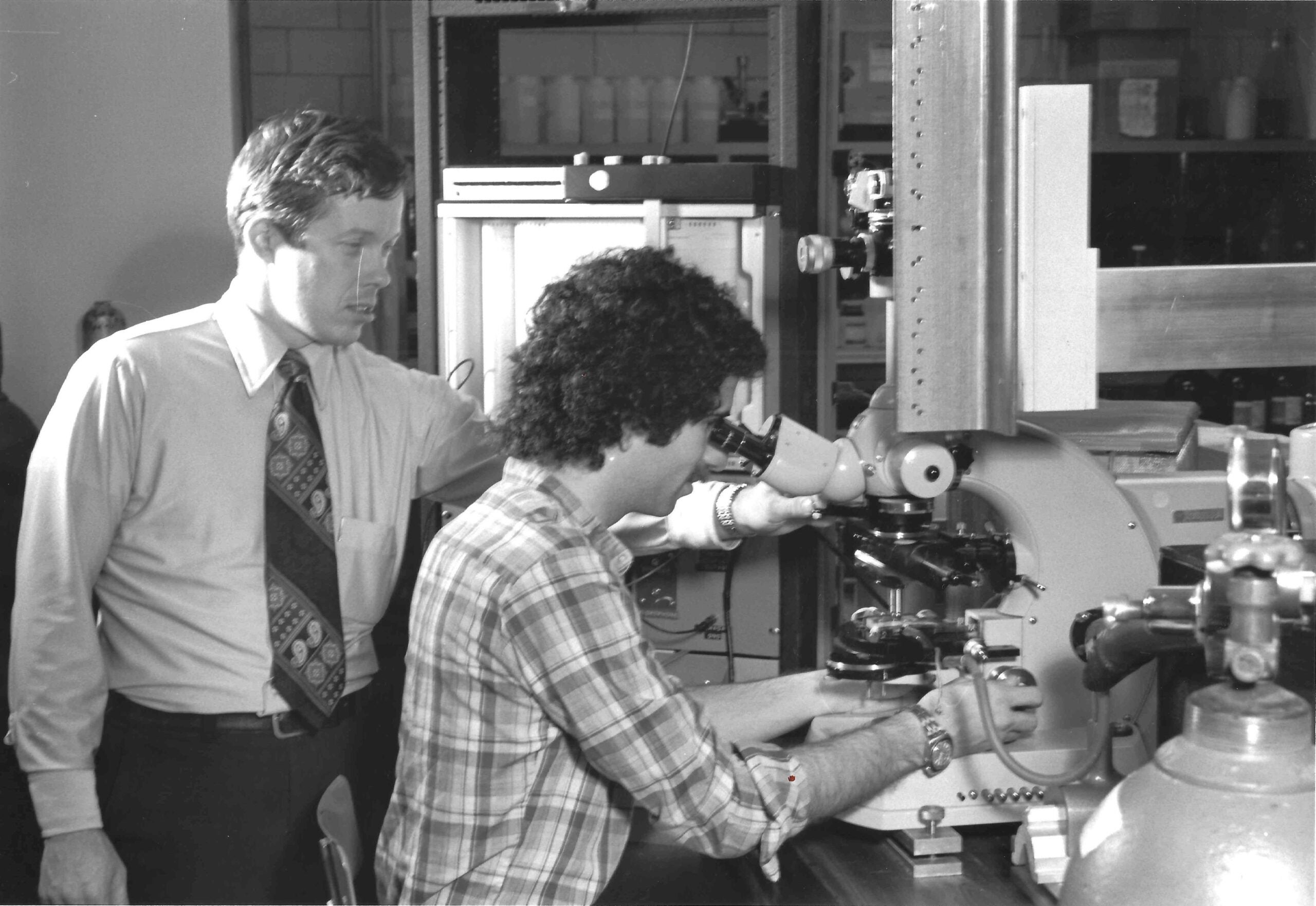
Heat exchange has long been his focal point. His research garnered significant attention worldwide because of his approach to applying it to relatable, real-world issues.
For example, in his research, he translated core principles of heat exchange to help people sleep better. And in his courses, he had students study some of his other passions.
“If you know Ken, you know his favorite dessert is ice cream; he actually did research on ice cream. When we were grad students, there was a project in the course to analyze brain freeze, the heat transfer process that induces the nervous reaction to cause that sudden, painful headache,” said Chris Rylander, who studied under Diller and is now a mechanical engineering professor at UT.
Diller also found his way into the courtroom, as an expert witness, of course. At first, Diller wanted no part of testifying in trials, but he grew to enjoy it, eventually serving as an expert witness in hundreds of lawsuits.
He testified in the infamous McDonald’s lawsuit in the 1990s, in which a woman spilled hot coffee on her lap and sued the fast-food giant. Colleagues at scientific conferences still talk about it, and Diller remains involved in active cases.
”I had always thought there was no way this kind of activity is a match for who I am,” Diller said. “Eventually, I figured out it is enjoyable to have an intellectual wrestling match in a courtroom with a silver-tongued lawyer who doesn’t know 2% of what I know but can out-argue me.”
Beyond research, Diller sought out another academic challenge, fusing faith and science. For more than a decade, he has taught a course called Science and the Bible that will continue in his retirement.
The course covers critiques of the Bible from various scientific and spiritual perspectives and how they can match. The discussion-based course aims to challenge assumptions, forces students to think critically about a difficult topic and requires them to defend their own personal positions.
“This intersection between my faith and my science, these two are mostly perceived to be like oil and water. They do not mix together,” Diller said. “But the fact is, I am one person, and they need to be compatible within me.”
Family, Friends, Faith
Diller grew up in Orrville, Ohio, which is known as the home of Smucker’s. From an early age, family and community were important to Diller. He treasured his parents, he said.
His mother was a stabilizing influence that counteracted the chaotic force next door. Diller’s neighbor was none other than Bobby Knight, who became one of the greatest college basketball coaches of all time, who was known for his fiery attitude. They were complete opposites.
”It was quite an interesting experience to grow up with all that brashness next door. We both survived,” Diller said.
It was through his faith that he met JoAnn while he was a student at Ohio State University. They were married in June of 1967—a big year that also saw Diller move to Cambridge, Mass., to pursue his doctorate at MIT and double down on his faith.
They’ve now been together for 59 years. Since then, he’s played a key role in other people’s weddings, officiating many ceremonies. That includes the wedding of his former graduate students Chris and Nichole Rylander, both now professors at the Cockrell School.
This summer, they celebrated their 25th anniversary, the same as the Department of Biomedical Engineering.
As Diller’s academic career progressed, he delighted in mentoring others. Karen Nyberg is one of the first women to travel to space and a former student of Diller’s. She’s spent more than 180 days in space and retired in 2020.
When she met Diller in the 1990s, while touring campuses to find a graduate school, she shared her goal: to become an astronaut. Diller, then the mechanical engineering chair, was ready to help her out.
“There was no hesitation, no skepticism, there was no subtle message that that was unrealistic, it was just ‘OK, let’s figure out what you need to do to do that,’” Nyberg said.
Karen Nyberg
There was this quiet confidence in him, like he could see my path before I could see it myself, and that kind of belief from someone can make a person see what’s possible.
But he didn’t stop at mentoring. Diller built connections beyond the classroom and lab.
He and JoAnn have taken in students to live with their family over the years. He frequently hosts friends, family and colleagues at his property in Elgin, an adult playground home to a variety of construction vehicles over the years, as well as a fire truck, all immaculately maintained by Diller, of course.
The academic achievements, including starting a whole department from scratch, the mentoring, the family life and his faith, they all have something in common. Diller always sought to build communities big and small.
Ken Diller
I’m one person, and I am more than just a professor. The non-academic activities are equally important. Know your personal priorities and pursue them with confidence. Once time has passed, it can’t be recovered.
Sidebar: Behind the Bowtie
How did Diller find his signature look? His wife JoAnn told us the story:
In 1989, Ken had a year-long sabbatical in Cambridge, England. I went with him, of course, as well as our youngest child, Tim, who was 15 at the time. We also took one of his graduate students and his wife along, as they were planning to do research while there. His student always wore a bow tie, and in the course of the time there, he taught Ken how to tie one, so from that time, Ken was “hooked.” At that time, hardly anyone wore a bow tie, so even finding one to buy in Cambridge was a challenge.
A few years later, when we took a group of students to Cambridge for Maymester, they searched high and low to find a bow tie to buy to give him as a gift, and at the end of the time there they presented him with one. They took a photo of the group and had it framed with colorful bow ties drawn by each of them on the mat around the photo. You can see it in his office the next time you’re in his building.
I can’t say that Ken has started a trend, but there are certainly a lot more bow ties around now than there were 35 years ago.
More Stories
Texas Engineering Once Again Named Among Top 10 Best Graduate Engineering Programs