
Transforming Health Care Equity
The newest faculty member in The University of Texas at Austin’s Department of Biomedical Engineering traveled the world improving health care for those who need it most—and her journey is only getting started.
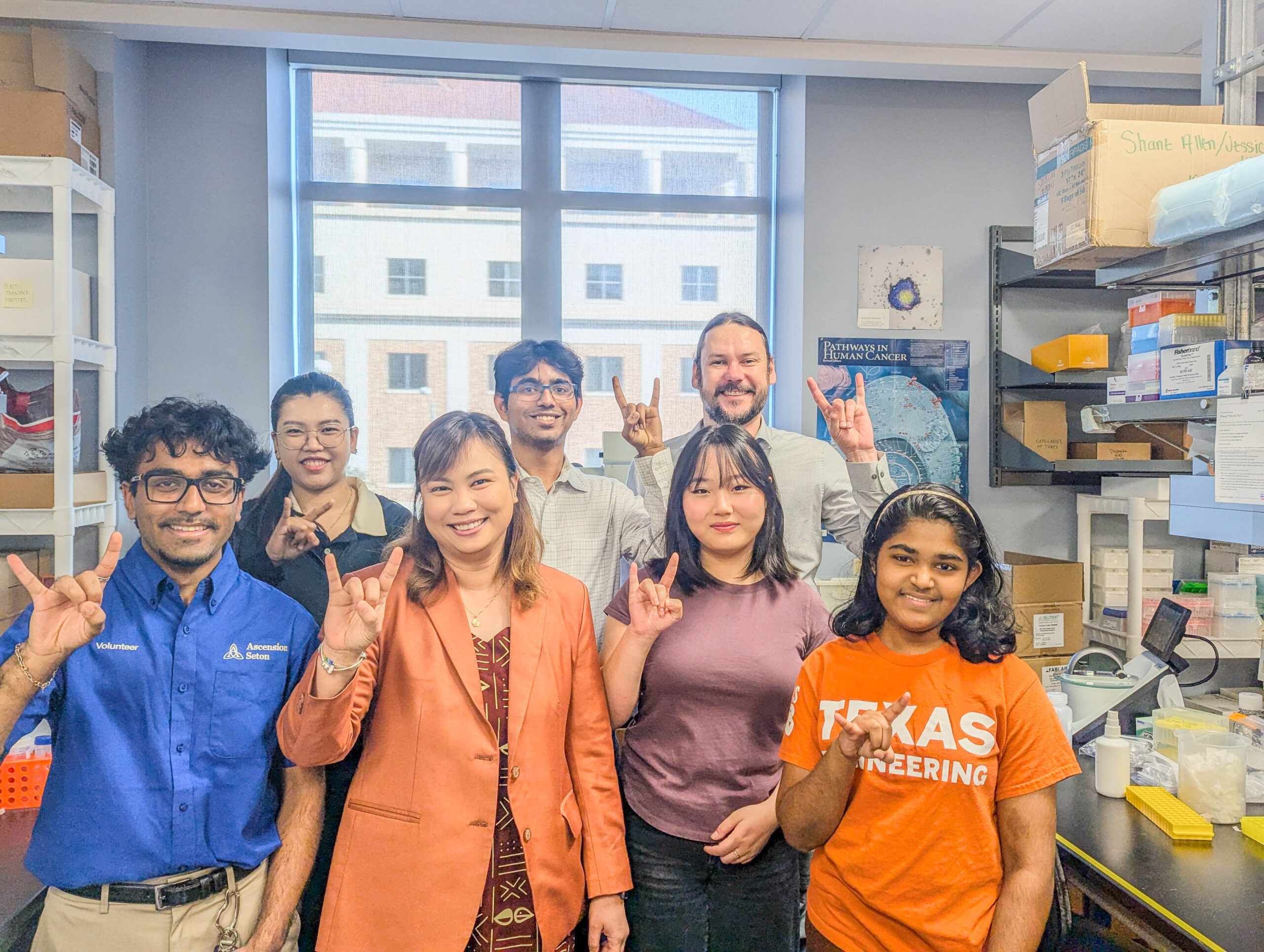
Shaped by personal experiences across the globe, assistant professor Nuttada Panpradist considers herself a “lifelong learner” and is on a mission to tackle health care disparities.
Her academic quest began in her home country of Thailand with a Bachelor of Engineering in petrochemical and polymeric materials. The degree focuses on the science of transforming petroleum-based raw materials into everyday essentials—such as plastics, synthetic fibers and coatings.
Despite graduating near the top of her class, she discovered the extent of how restrictive the job market was, particularly the barriers for women in engineering.
“Male, under the age of 35’—that was a common requirement in job descriptions for petrochemical engineering positions. I couldn’t change the reality that these opportunities were out of reach for reasons beyond my control. It felt unfair, but at the time, there wasn’t much I could do,” said Panpradist.
Undeterred by gender or age barriers, she started working in medical sales and found an unrealized passion for health care. Panpradist was amazed by how medical devices could improve lives, but it was tough to see that only a few people could afford them.
“I began thinking of ways to make medical devices more affordable and accessible and quickly realized that I needed more training to make a real impact. That’s when I stumbled upon the field of biomedical engineering—a perfect blend of technology and health care.”
Nuttada PanpradistDepartment of Biomedical Engineering

At the time, Thailand didn’t offer a Ph.D. in her newfound field of interest, so she chose to pursue her passion in the U.S.
Panpradist uprooted her life, landing in Seattle for a Ph.D. program in bioengineering at the University of Washington with the goal of making health care accessible and affordable for all. Foreshadowing her future journey, she was advised by associate professor Barry Lutz, an alumnus of the McKetta Department of Chemical Engineering at UT.
“I remember the beginning of this journey as if it were yesterday, even though it was 15 years ago. During my interview for an intern position, I arrived with a chart outlining my 10-year plan, making the case for how this internship would be a crucial step in preparing for my Ph.D. application. I confidently argued that with a Ph.D., I would become a professor in bioengineering—a career that, to me, represented the perfect intersection of innovation, mentorship, and impact,” said Panpradist.
Now her dreams slowly started to become realities. Panpradist developed diagnostic testing for HIV drug resistance (HIVDR), tuberculosis (TB) infection, adherence to TB treatment, and, most notably, for COVID-19. Her “OLA-Simple” HIVDR test was deployed in three laboratories in Kenya, and her ‘Harmony COVID-19’ test was licensed for commercial use by Anavasi Diagnostics.
As she traveled the world developing these products, Panpradist achieved another milestone. She became the first bioengineering student at UW to earn a graduate certificate from the Global Center for Integrated Health of Women, Adolescents, and Children.
The program provided invaluable exposure to real-world contexts and allowed her to learn directly from clinicians and global health researchers. One particularly impactful experience came during a global health/bioengineering seminar course.
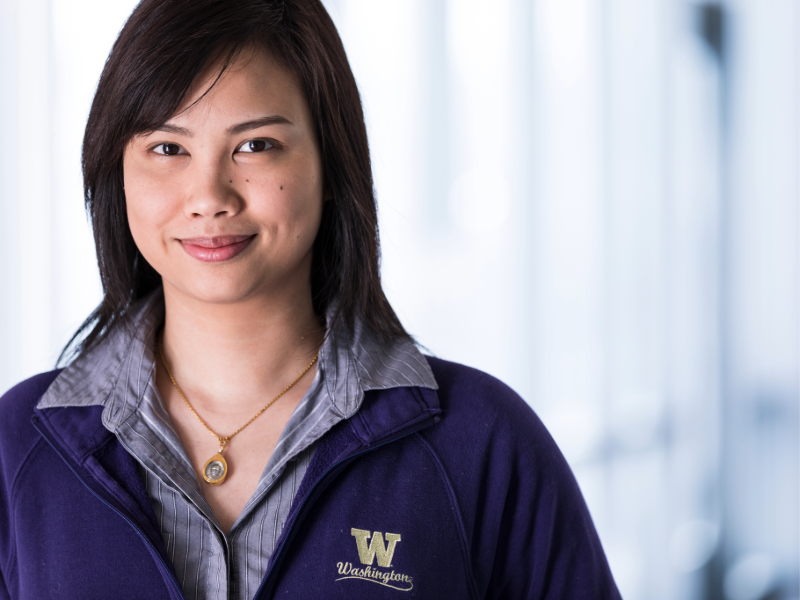

Nuttada Panpradist during her time at the University of Washington
“I was paired with Dr. Diana Marangu, a Kenyan clinician and MPH student at the time. Together, we explored the idea of developing urine-based diagnostics for TB—a concept that led to multiple funded proposals and active projects,” she said.
Over time, Panpradist’s team successfully demonstrated the most sensitive TB DNA diagnostic from clinical urine specimens to date, marking a significant advancement in TB detection.
To bridge the ever-prevalent gap in academia between concept and practice, she turned to the path that all biomedical engineers eventually take—an interdisciplinary collaboration.
“A pivotal moment in my Ph.D. journey was the opportunity to take the OLA-Simple prototype, quite literally, onto the stage at an international conference in South Africa. This gathering brought together experts and WHO representatives from around the world to discuss advancements in HIV diagnostics and care,” she said.
Now it was time to bring this product to the people who needed it. Panpradist’s team identified Mexico as their first pilot country due to the pivotal need for a low-cost HIV drug resistance test. At that time, HIV drug resistance was rising, with the World Health Organization recommending a shift to a new drug regimen for countries where resistance exceeded 10%.
Within a year, the researchers proved the OLA-Simple’s performance matched the gold-standard results from the country’s top WHO-certified HIV lab.
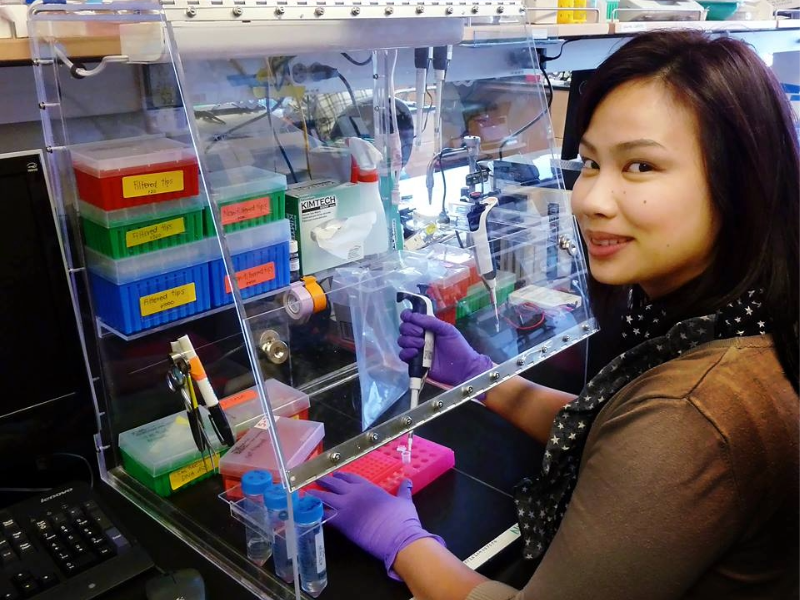
What started as a research prototype became a practical tool addressing a critical need, proving that sometimes, the right partnerships and a bit of boldness can make all the difference.
With these remarkable accomplishments as well as a Ph.D. under her belt, Panpradist returned to her No. 1 passion: honing her research in the field of biomedical engineering, with a focus on developing sustainable diagnostic testing for underserved areas around the globe.
“I’m excited to bring my expertise and experience to expand our research efforts in addressing health disparities in Texas. While cities like Austin boast incredible advancements in technology, many Texans still lack access to essential medical diagnostics. Bridging this gap is a challenge—but one that I’m eager to take on,” she said.
Drawn by Austin’s rising reputation and UT’s mission to become the highest-impact research
institution in the world, Panpradist knew she had found the perfect academic home. Bringing her expertise to a place where innovation thrives felt like a natural fit—after all, UT’s motto couldn’t resonate more with her own passion: What Starts Here Changes the World.”
With an extra nudge of encouragement from her Ph.D. advisor and former Longhorn, Panpradist took off from the Emerald City and followed the Yellow Brick Road to the Live Music Capital of the World — launching her “innovative, inclusive and sustainable global diagnostics research program” as part of her lab at UT.
It focuses on four key areas, each tackling critical global health challenges:
- Rethinking technology transfer for equitable research
- Safeguarding health through environmental screening
- Bringing diagnostics closer to patients
- Pushing boundaries with engineered chemistry
Through these four interconnected areas, Panpradist’s program isn’t simply advancing science—it’s reimagining how global health solutions are created and shared, ensuring innovation reaches those who need it most.
“I’ve collaborated with multiple global leaders in health care and conducted research in six low- and middle-income countries. It’s all part of my mission to create meaningful change in bioengineering and global health.”
Nuttada Panpradist
Beyond the breakthroughs and accolades, her mission is clear: to leave a legacy of tangible change that empowers communities and elevates global health for generations to come. In the pursuit of equity, she’s not only advancing science—she’s rewriting the future of health care itself.